Design Exercise: Pastebin
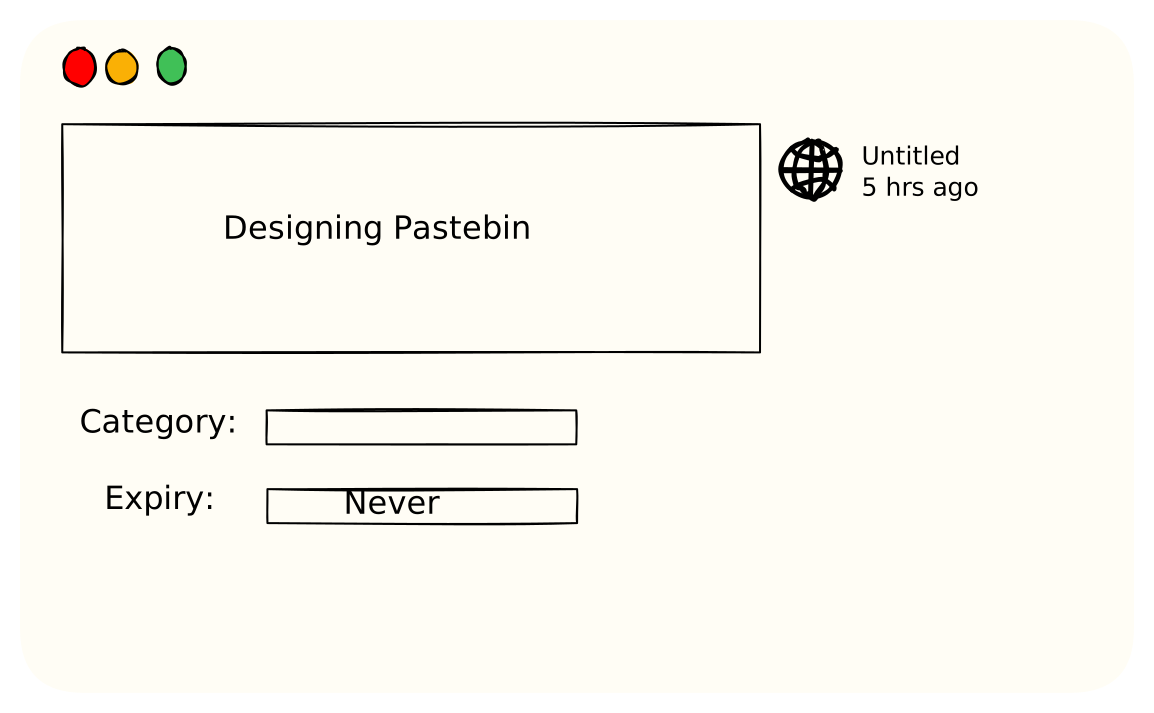
Time to put theory into practice.
In this exercise, you will design a Pastebin-like service—a simple application that lets users store and share text snippets. This is a classic system design problem because it seems simple but reveals important design decisions as you dig deeper.
How to use this exercise:
- Try designing the system yourself first (20-30 minutes)
- Then read through the solution to compare approaches
- Note where your thinking differed—both approaches might be valid
This mirrors the system design interview experience. There is no single "correct" answer, but there are better and worse approaches.
The Problem
Design a service like Pastebin where users can:
- Paste text and get a unique URL
- Access the paste via that URL
- Optionally set an expiration time
Seems simple, right? Let us see what complexity emerges.
Step 1: Clarify Requirements
Before drawing any boxes, understand what you are building.
Functional Requirements
Core features (must have):
- Users can create a paste with text content
- System generates a unique, short URL for each paste
- Anyone with the URL can view the paste
- Pastes can have an expiration time (optional)
Nice to have (ask interviewer):
- User accounts and authentication
- Private pastes (password protected)
- Edit/delete functionality
- Syntax highlighting
- Analytics (view count)
Out of scope (for this exercise):
- File uploads (images, documents)
- Real-time collaboration
- Version history
Non-Functional Requirements
Scale:
- How many pastes per day? → Let us assume 1 million pastes created per day
- How many reads per paste? → Average 10 reads per paste → 10 million reads/day
- How long do we store pastes? → 5 years for non-expiring pastes
Performance:
- Read latency: < 200ms
- Write latency: < 500ms (user can wait a bit)
Availability:
- 99.9% uptime (about 8 hours downtime per year)
Other:
- URLs should be short (for sharing)
- URLs should not be easily guessable (prevent enumeration)
Step 2: Back-of-the-Envelope Calculations
Let us size this system.
Storage Estimation
Pastes created:
plaintext1 million pastes/day × 365 days × 5 years = 1.8 billion pastes Round to: 2 billion pastes
Size per paste:
plaintextAverage paste size: 10 KB (text content) Metadata (URL, timestamp, expiry, user): 100 bytes Total per paste: ~10 KB
Total storage:
plaintext2 billion pastes × 10 KB = 20 TB With 3x replication: 60 TB
60 TB is significant but manageable. This is not petabyte-scale.
QPS Estimation
Writes (paste creation):
plaintext1 million/day ÷ 100,000 seconds/day = 10 writes/second Peak (3x): 30 writes/second
Reads (paste views):
plaintext10 million/day ÷ 100,000 seconds/day = 100 reads/second Peak (3x): 300 reads/second
These numbers are modest. A single server could handle this, but we will design for growth and reliability.
URL Space
How many unique URLs do we need?
plaintext2 billion pastes over 5 years Using base62 (a-z, A-Z, 0-9): 62 characters 6 characters: 62^6 = 56 billion combinations 7 characters: 62^7 = 3.5 trillion combinations
6-character URLs give us 56 billion combinations for 2 billion pastes—plenty of headroom. We will use 6 characters.
Step 3: High-Level Design
Start with the simplest architecture that could work:
plaintext┌─────────┐ ┌─────────────┐ ┌─────────────┐ │ User │──────►│ API Server │──────►│ Database │ └─────────┘ └─────────────┘ └─────────────┘
But we identified several requirements that complicate this:
- High availability (need redundancy)
- Fast reads (need caching)
- Large content storage (database might not be optimal)
Let us evolve the design:
plaintext┌─────────────┐ │ Users │ └──────┬──────┘ │ ┌──────▼──────┐ │ CDN │ ← Cached pastes └──────┬──────┘ │ ┌──────▼──────┐ │Load Balancer│ └──────┬──────┘ │ ┌─────────────────┼─────────────────┐ │ │ │ ┌────▼────┐ ┌────▼────┐ ┌────▼────┐ │ API 1 │ │ API 2 │ │ API 3 │ └────┬────┘ └────┬────┘ └────┬────┘ │ │ │ └─────────────────┼─────────────────┘ │ ┌─────────────────┼─────────────────┐ │ │ │ ┌────▼────┐ ┌────▼────┐ ┌────▼────┐ │ Cache │ │Metadata │ │ Object │ │ (Redis) │ │ DB │ │ Storage │ └─────────┘ └─────────┘ │ (S3) │ └─────────┘
Component Breakdown
| Component | Purpose |
|---|---|
| CDN | Cache popular pastes at edge locations |
| Load Balancer | Distribute traffic across API servers |
| API Servers | Handle requests, generate URLs, coordinate storage |
| Cache (Redis) | Store hot pastes for fast reads |
| Metadata DB | Store paste metadata (URL, expiry, created_at) |
| Object Storage (S3) | Store paste content (the actual text) |
Why separate metadata from content?
Paste content can be up to 10 KB or more. Storing large blobs in a relational database is inefficient. Object storage (S3, GCS) is designed for this:
- Cheap storage for large files
- Built-in replication and durability
- Easy CDN integration
Metadata is small and needs fast lookups—perfect for a database.
Step 4: Deep Dive - Key Components
URL Generation
We need unique, short, non-guessable URLs. Several approaches:
Option 1: Random Generation
plaintextGenerate random 6-character string Check if it exists in database If exists, generate another If not, use it
Pros: Simple, truly random (non-guessable) Cons: Collision checking adds latency and database load
Option 2: Counter + Base62 Encoding
plaintextIncrement counter: 1, 2, 3, ... Convert to base62: 1→"1", 62→"10", 3844→"100"
Pros: No collisions, fast Cons: Predictable (can enumerate), requires distributed counter
Option 3: UUID Truncation
plaintextGenerate UUID: 550e8400-e29b-41d4-a716-446655440000 Take first 6 characters: 550e84 Base62 encode if needed
Pros: Stateless, no coordination needed Cons: Collision risk (mitigated by checking)
Recommended: Random with retry
For Pastebin's scale (10 writes/second), collision checking is cheap:
pythondef generate_url(): while True: url = random_base62_string(6) if not database.exists(url): return url
With 56 billion possible URLs and 2 billion pastes, collision probability is ~3.5%. A single retry almost certainly succeeds.
Data Model
Paste Metadata (SQL Database):
sqlCREATE TABLE pastes ( short_url VARCHAR(10) PRIMARY KEY, content_key VARCHAR(255), -- S3 object key created_at TIMESTAMP, expires_at TIMESTAMP NULL, user_id VARCHAR(50) NULL, -- Optional, for registered users view_count INT DEFAULT 0 ); CREATE INDEX idx_expires_at ON pastes(expires_at);
Paste Content (Object Storage):
plaintextBucket: pastebin-content Key: {short_url} Content: Raw text content
API Design
Create Paste:
plaintextPOST /api/pastes Body: { "content": "print('Hello World')", "expires_in": 3600 // Optional: seconds until expiration } Response: { "url": "https://paste.example.com/abc123", "expires_at": "2024-12-20T10:00:00Z" }
Read Paste:
plaintextGET /api/pastes/{short_url} Response: { "content": "print('Hello World')", "created_at": "2024-12-19T10:00:00Z", "expires_at": "2024-12-20T10:00:00Z" }
Or redirect to a rendered view:
plaintextGET /{short_url} → HTML page with paste content displayed
Read Path (Optimized)
For reads, we want to minimize latency:
plaintext1. User requests paste.example.com/abc123 2. CDN checks cache → HIT? Return immediately 3. If CDN MISS → Request goes to Load Balancer 4. API Server checks Redis cache → HIT? Return 5. If Redis MISS → a. Fetch metadata from database b. Fetch content from S3 c. Populate Redis cache d. Return response
With aggressive caching, most requests never hit the database.
Cache TTL Strategy:
- CDN: 5 minutes (balance freshness vs cache efficiency)
- Redis: 1 hour (hot pastes stay in memory)
Write Path
plaintext1. User submits paste content 2. API Server: a. Generate unique short URL b. Upload content to S3 (content_key = short_url) c. Insert metadata into database d. Return short URL to user 3. (Optional) Invalidate any cached versions
Write consistency: We insert metadata only after S3 upload succeeds. If S3 upload fails, we do not create a broken reference.
Expiration Handling
How do we delete expired pastes?
Option 1: Lazy deletion
plaintextWhen paste is requested: if paste.expires_at < now: return 404 (or "Paste expired")
Pros: Simple, no background jobs Cons: Expired data still consumes storage
Option 2: Background cleanup job
plaintextEvery hour: DELETE FROM pastes WHERE expires_at < NOW() Delete corresponding S3 objects
Pros: Reclaims storage Cons: Need to manage background workers
Recommended: Both
- Check expiration on read (immediate user experience)
- Run background cleanup (reclaim storage)
Step 5: Addressing Bottlenecks
Database as Bottleneck
At 300 reads/second peak, a single database is fine. But if we scale to 10x:
Solution 1: Read replicas
plaintextWrites → Primary Reads → Replicas (round-robin)
Solution 2: Cache more aggressively With 95% cache hit rate, only 5% of reads hit database:
plaintext3,000 reads/second × 5% = 150 database reads/second
S3 as Bottleneck
S3 is designed for massive scale. It is unlikely to be a bottleneck. But we can optimize:
- Use S3 Transfer Acceleration for global writes
- Use CloudFront (CDN) for reads
- Set appropriate cache headers
Hot Pastes
What if one paste goes viral and gets 1 million views?
The thundering herd problem:
- Paste is not in cache
- 10,000 concurrent requests all hit database/S3
- Database overwhelmed
Solution: Request coalescing
plaintextIf paste not in cache: If another request is already fetching: Wait for that request to finish Else: Fetch and populate cache Return cached value
Redis supports this with SETNX (set if not exists) for locking.
Step 6: Additional Considerations
Security
URL enumeration: With 6-character URLs, an attacker could try to guess valid URLs. Mitigations:
- Rate limiting per IP
- Use 7-8 character URLs (more combinations)
- Monitor for scanning patterns
Content moderation: People will paste malicious content. Consider:
- Abuse reporting mechanism
- Automated scanning for malware/illegal content
- Clear terms of service
Analytics
If we want view counts:
- Increment counter on each read
- Use Redis INCR (atomic, fast)
- Batch persist to database periodically
plaintextRead request: redis.incr("views:abc123") // Fast, in-memory Background job (every minute): for url, count in redis.scan("views:*"): database.increment_views(url, count) redis.delete("views:" + url)
Global Distribution
For a global user base:
- Deploy API servers in multiple regions
- Use global load balancer (AWS Global Accelerator, Cloudflare)
- S3 with cross-region replication
- Database: either multi-region (complex) or accept higher latency for writes
For Pastebin's read-heavy workload, CDN solves most latency issues.
Final Architecture Summary
plaintext┌───────────────────────┐ │ Internet │ └───────────┬───────────┘ │ ┌───────────▼───────────┐ │ CDN │ │ (CloudFront/CF) │ └───────────┬───────────┘ │ ┌───────────▼───────────┐ │ Load Balancer │ └───────────┬───────────┘ │ ┌─────────────────────┼─────────────────────┐ │ │ │ ┌─────▼─────┐ ┌─────▼─────┐ ┌─────▼─────┐ │ API Srv │ │ API Srv │ │ API Srv │ └─────┬─────┘ └─────┬─────┘ └─────┬─────┘ │ │ │ └─────────────────────┼─────────────────────┘ │ ┌─────────────────────────────┼─────────────────────────────┐ │ │ │ ┌─────▼─────┐ ┌─────▼─────┐ ┌─────▼─────┐ │ Redis │ │ Primary │ │ S3 │ │ Cache │ │ DB │ │ Storage │ └───────────┘ └─────┬─────┘ └───────────┘ │ ┌─────▼─────┐ │ Replica │ │ DB │ └───────────┘
Cost Estimation (Rough)
| Component | Monthly Cost (AWS) |
|---|---|
| 3 API servers (t3.medium) | $100 |
| RDS PostgreSQL (db.t3.medium) | $100 |
| Redis (cache.t3.micro) | $25 |
| S3 (60 TB storage) | $1,400 |
| CloudFront (data transfer) | $500 |
| Total | ~$2,100/month |
Not cheap, but reasonable for a service handling 10 million requests/day.
Common Mistakes in This Design
Mistake 1: Storing content in the database Large text blobs in PostgreSQL works but is inefficient. Object storage is cheaper and scales better.
Mistake 2: Forgetting about expiration Without expiration handling, storage grows forever. Always design for data lifecycle.
Mistake 3: Ignoring hot content One viral paste can overwhelm your system. Caching and request coalescing are essential.
Mistake 4: Over-engineering For 10 writes/second, you do not need Kafka, microservices, or sharding. Start simple.
Key Takeaways
-
Separate metadata from content. Different storage systems for different access patterns.
-
Cache aggressively. Read-heavy systems benefit enormously from CDN and in-memory caching.
-
Plan for expiration. Data without a lifecycle will consume resources forever.
-
Size your system. Back-of-envelope calculations prevent over-engineering and under-engineering.
-
Consider failure modes. Hot content, expired data, and storage failures all need handling.
Practice Extensions
Try extending this design:
- Private pastes: How would you add password protection?
- Edit functionality: What changes to support updating paste content?
- Syntax highlighting: Where would this processing happen?
- 10x scale: What breaks at 100 million pastes/day?
Work through these mentally or on paper before the next lesson.